Design Guidelines for Ethical and Accessible Design
This project has an ethical approach to accessibility, cognitive load and everyday decision-making.
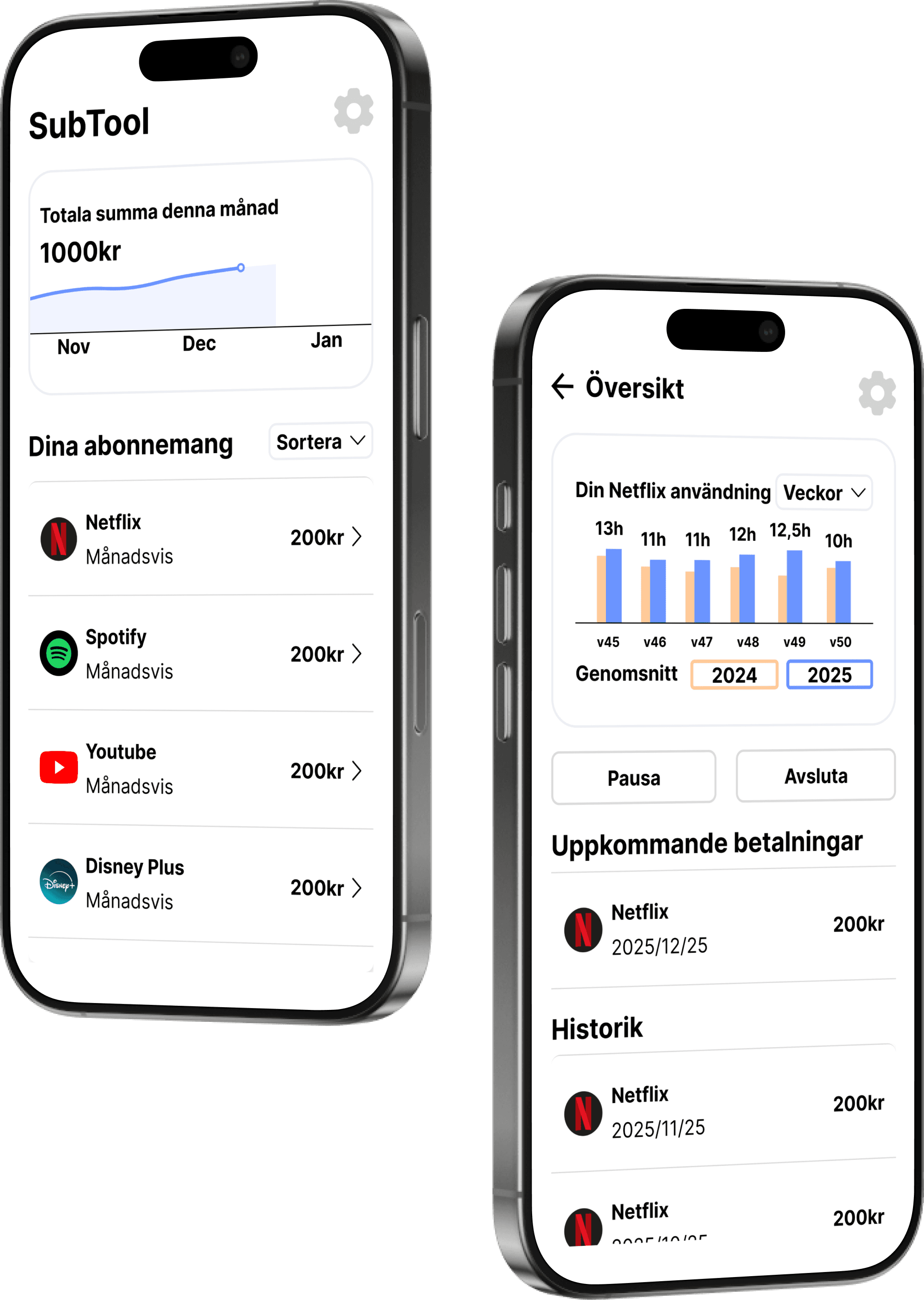
This project is grounded in the belief that our desisions as designers carries responsibility. When people are stressed, tired or under time pressure, even small interface decisions can have a big impact.
In this project we developed a set of design guidelines rooted in ethical design, accessibility and design for all. Instead of designing for an “ideal user,” we treated variation as the baseline.
Our goal was therefore not only to make something usable but to design something considerate, while staying true to the guidelines.
Project
Duration: 2 weeks
Role: Visual designer
Content: Creating design guidelines
Creating the Guidelines
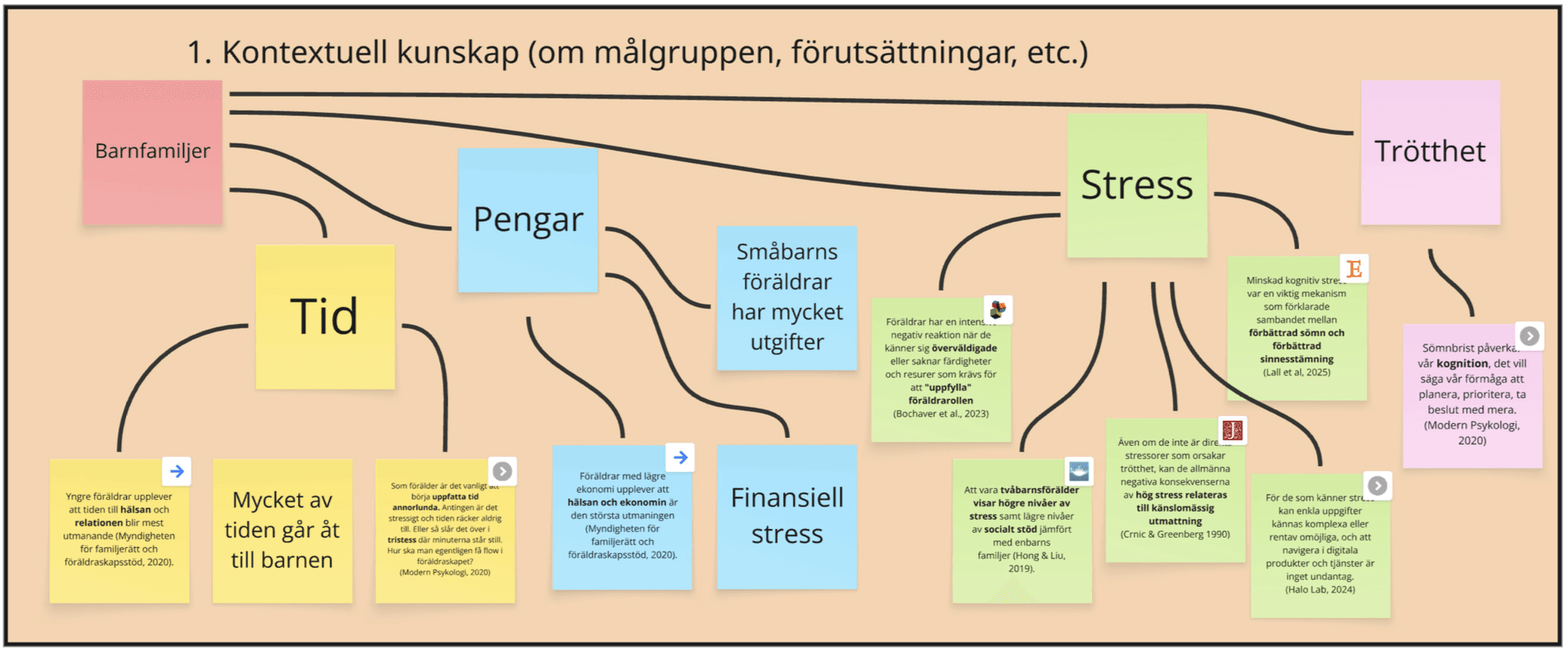
To turn these values into something concrete, we stepped back and looked at the context people actually interact with these services in. We explored everyday constraints such as stress, fatigue, limited time and cognitive overload, and how these conditions shape behaviour and decision making.
Through research and reflection, we identified recurring patterns that informed our design choices. These insights became the foundation for a set of design guidelines.
Allowing Personal Adaptation
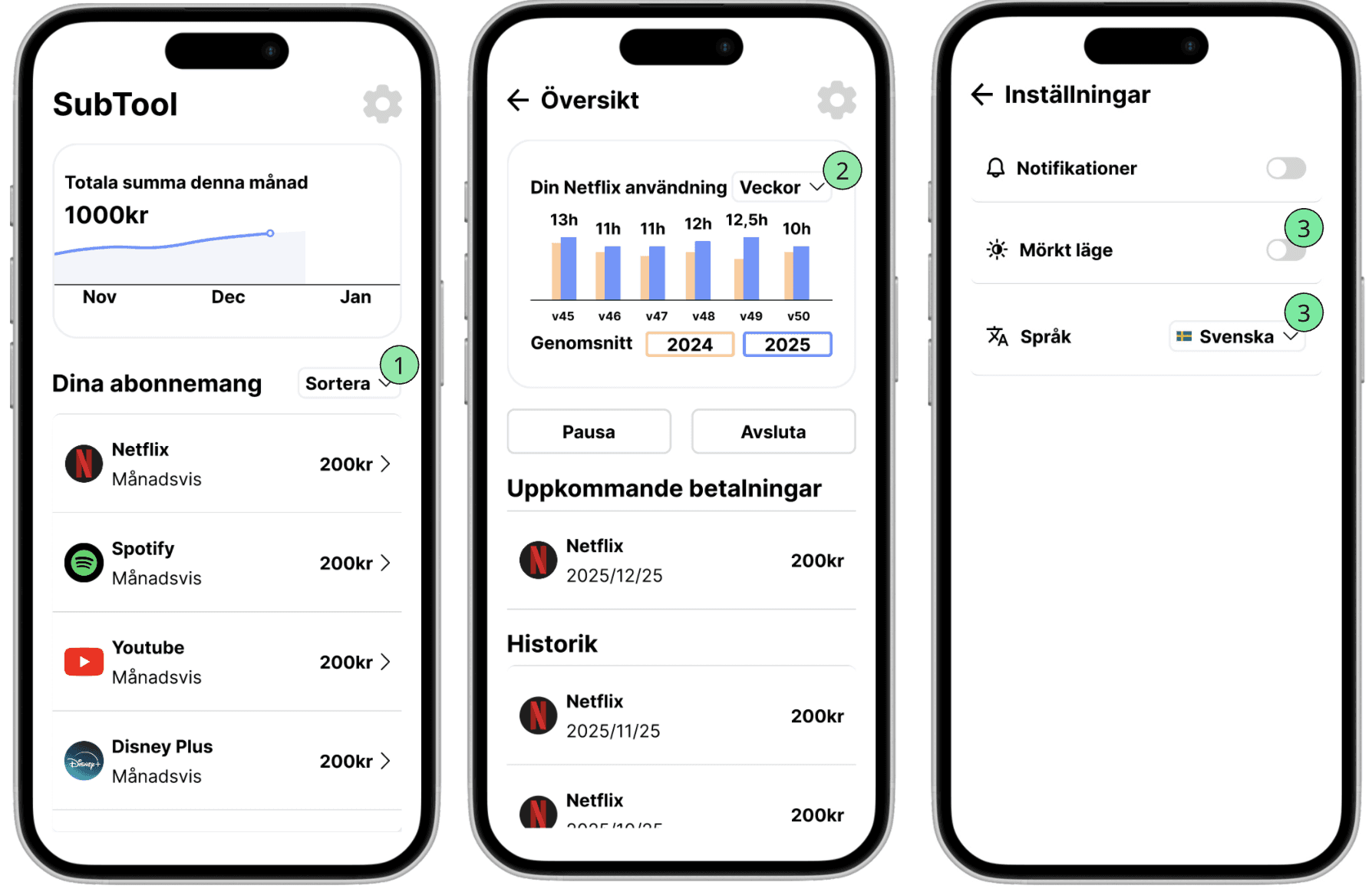
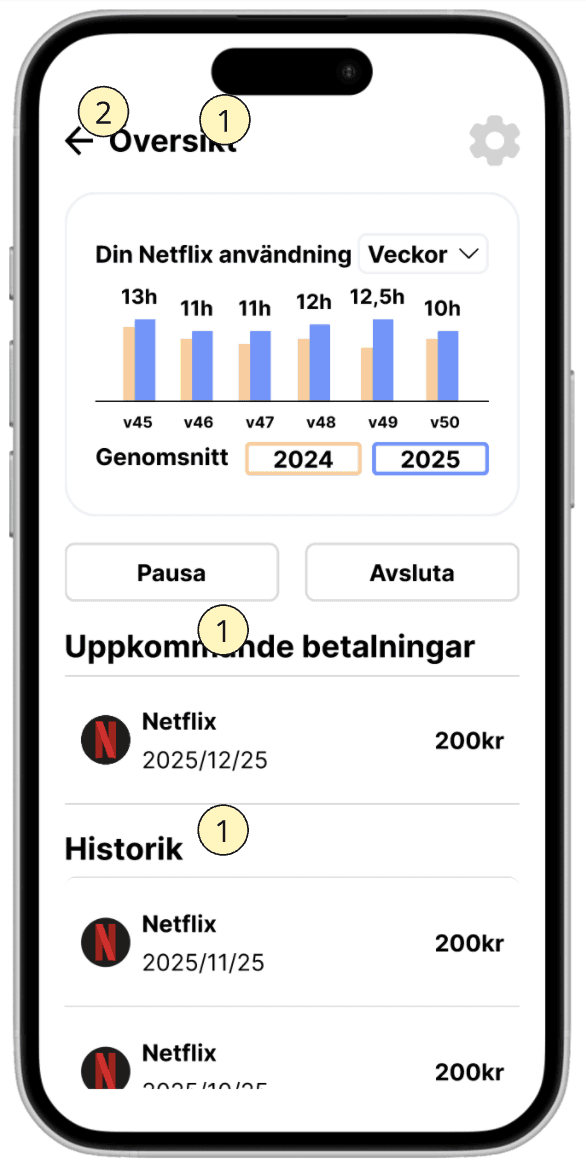
People have different needs, preferences and abilities. The interface supports customisation such as sorting, adjustable time ranges, language selection and dark mode. Accessibility here is not an add on, but a way to let the interface adapt to the user, not the other way around.
Encouraging Reflection, not Impulsive Action
Rather than optimising only for speed, the design introduces moments of reflection. Costs, usage data and upcoming payments are made visible, and sensitive actions like cancelling a subscription require confirmation. This creates positive friction and informed decisions instead of impulsive ones.
Keeping Processes Short and Focused
Long or complex flows increase friction, especially in stressful situations. By minimising steps and reducing the number of screens, we created a faster, more forgiving experience that respects the user’s time and energy.
Reducing Cognitive Load
The interface is designed to feel calm and predictable. Clear hierarchies, consistent navigation and a limited number of choices help users focus on what matters, without unnecessary mental effort. When attention is limited, the interface should do the heavy lifting.
Using Familiar Patterns
Recognisable icons, layouts and interaction patterns reduce the need to learn something new. Familiarity lowers cognitive effort, increases confidence and makes the experience easier to navigate, especially when users are tired or stressed.
An Ethical Perspective
This project reinforced my view that accessibility is not just a technical concern, it is an ethical one. Design decisions influence how people think, decide and feel. Prioritizing clarity, tolerance for error and reduced cognitive load is a way of designing with empathy and responsibility.
Key Takeaways
This project has really changed my way thinking when approaching a designproblem. Every decision we make has an effect on how the user interprets it. By creating an accessible interface from the beginning, it creates a more seamless user experience for the vast majority of users.
Good design is not only about efficiency. It’s about care.